
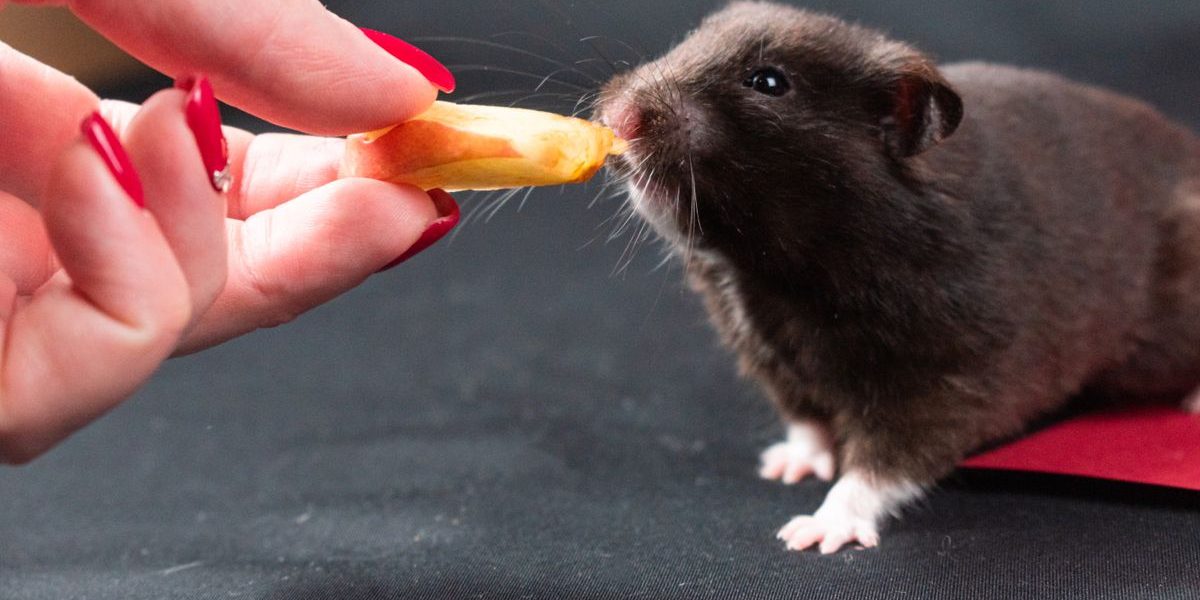
Hamster training is mostly routine and trust. Let a new hamster rest for the first few days, get it used to your voice and hand, then use small food rewards to teach it to come to you. Many hamsters will also use a sand tray as a toilet if you put one in the corner they already use.
The RSPCA notes that hamsters learn quickly and can be trained to come when food is offered or to do simple tricks. The steps below follow the order a new hamster needs.
Welcoming a hamster home
Rest
Have the enclosure ready, put the hamster in, and leave it be. Blue Cross advises two or three undisturbed days apart from feeding; Woodgreen says no handling for the first day or two. See bringing your hamster home.
Get close
Sit near the enclosure in the evening and talk quietly. Rest a clean hand inside and let the hamster come to sniff it.
Get to know each other
Offer a small treat from your fingers, then from your open palm. Woodgreen suggests then sitting on the floor and letting the hamster walk over your hands and lap. After one to two weeks of calm sessions most hamsters accept being picked up.
Interact a little, often
The RSPCA recommends brief daily handling as routine, not long sessions at weekends. Woodgreen adds a useful rule: put the hamster back while it is relaxed, not when it nips or struggles, so it does not learn that biting ends the session.
Training your hamster to come to you
- Pick a cue: its name, a soft click of the tongue or a gentle tap. PetMD notes hamsters may come to respond to a repeated name or sound.
- Make the cue, then immediately offer a tiny treat at the front of the enclosure.
- Repeat once or twice an evening.
- Gradually offer the treat from your palm so the hamster steps on to collect it.
Use very small rewards, such as a single seed, and count them as part of the day’s food.
Toilet training with a sand tray
Hamsters naturally keep a toilet area; TVT notes wild Syrians have a separate toilet chamber. Woodgreen observes that many pet hamsters use their sand bath as a toilet, and PetMD says litter training is possible with practice.
- Notice which corner your hamster already uses.
- Place a shallow tray or dish of sand there, with a little of the soiled bedding on top.
- If it chooses another corner, move the tray.
- Remove wet sand daily.
- Expect urine in the tray but droppings scattered about; that is normal. Avoid clumping cat litter.
The method above is common keeper practice; we did not find a controlled study of it.
Setting up for success
Training goes better in a calm home. Check the enclosure against our setup guide: enough space, deep bedding, hides and a suitable wheel.
What not to do
- Never wake a hamster to train it.
- Never punish; it teaches fear.
- Do not train with sugary treats.
- Do not expect dog-style obedience. Short, positive and voluntary is the aim.
Frequently asked questions
Can hamsters learn their name?
PetMD says they may come to respond to a repeated name or sound, particularly when it predicts food.
How long does training take?
Coming for food can take a few days to a couple of weeks. Handling confidence takes longer and varies by individual and species.
You may also like
- How to tame a hamsterStage-by-stage plan
- Taming and picking up a hamsterHandling technique
- Bringing your hamster homeThe first week
- Signs of a happy hamsterIs it working?