
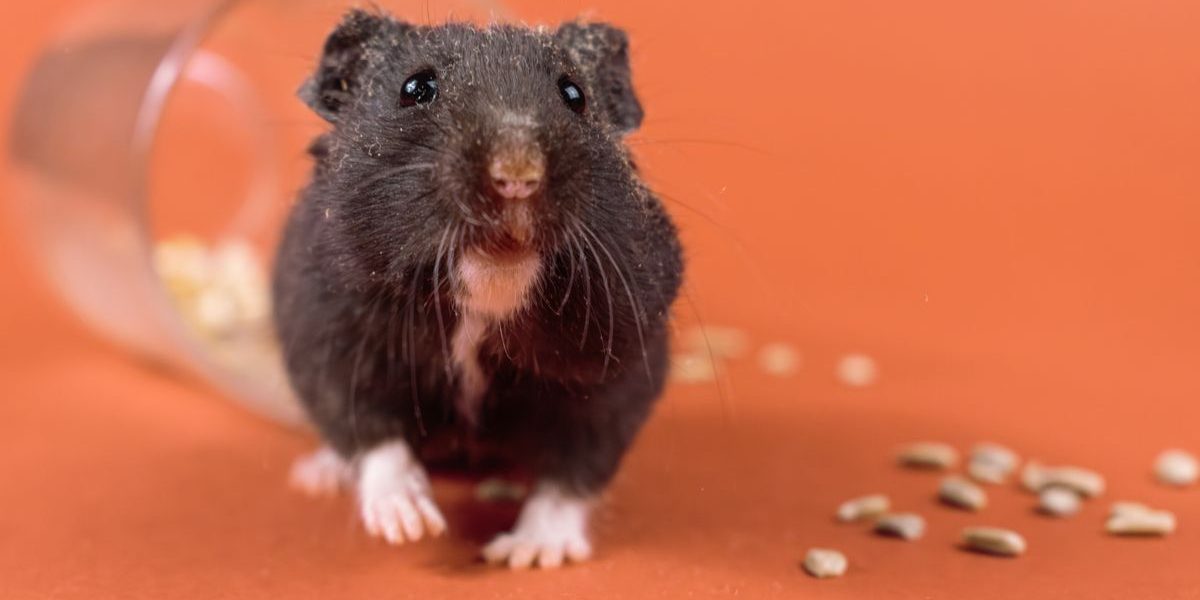
Hamsters communicate mostly through posture and scent rather than sound. Relaxed grooming, stretching, foraging and digging suggest a hamster at ease. Squinted eyes, flattened ears, a hunched back and a stiff walk are recognised signs of pain. Persistent bar chewing and pacing point to frustration with the enclosure.
A caution first. Welfare charities do not publish a full dictionary of hamster gestures, so some popular interpretations rest on keeper experience rather than research. Below we separate what veterinary and welfare sources state from what is commonly reported.
How hamsters communicate
TVT says hamsters communicate mainly by body language. They make ultrasonic calls people cannot hear, and audible squeaking, hissing or growling happens mainly in conflict. They recognise one another by scent, not sight.
Signs of pain: well established
| Gesture | Meaning | Source |
|---|---|---|
| Squinted or half-closed eyes | Possible pain | TVT |
| Ears held flat, whiskers laid back | Possible pain | TVT |
| Stiff, high-legged walk | Possible pain | TVT |
| Hunched back | Possible pain or illness | TVT |
| Hiding at its usual active time, not eating | Illness | Woodgreen |
Any of these warrants a call to a vet.
Signs of stress or frustration
| Behaviour | What it suggests |
|---|---|
| Biting the bars or plastic | Frustration, boredom or wanting out; can also damage teeth (Woodgreen) |
| Running the same route or circling repeatedly | Repetitive behaviour; the RSPCA flags it as a welfare warning |
| Excessive digging at corners or constant wheel running | Listed as stress signs by a UK vet author |
| Over-grooming, coat changes | Stress or a skin problem |
| Sudden aggression or more vocalising | Fear, pain or illness |
Research on Syrian hamsters has linked wire-gnawing to shallower bedding and smaller cages, which is why the first response should be to review the setup. See why cage size matters. A vet check is also sensible, because pain can cause the same behaviours.
Defensive signals
- Teeth chattering: Animal Diversity Web lists it as an aggression signal. Back off.
- Hissing, squeaking or growling: TVT associates these with conflict. A hamster making them at you feels threatened.
- Rearing up on hind legs with paws raised: commonly reported as a defensive posture, especially with chattering. Standing up while sniffing calmly is usually just investigation.
- Rolling onto its back with teeth showing: commonly reported as a last-resort defence.
Normal, everyday behaviour
| Behaviour | What is going on |
|---|---|
| Stuffing the cheek pouches | Carrying food to the store; the RSPCA notes Syrians can carry up to half their body weight |
| Hoarding | Natural; TVT says being unable to hoard raises stress |
| Rubbing hips or belly on objects | Scent marking: Syrians have flank glands, dwarfs a gland on the belly |
| Burrowing and rearranging bedding | Core natural behaviour |
| Grooming after waking | Routine coat care |
| Yawning and stretching | Commonly reported as a relaxed, just-woken hamster |
| Bursts of speed or leaping | Commonly reported as high spirits |
Climbing onto your hand
A hamster that approaches and climbs onto your hand by choice is showing trust. TVT recommends touching hamsters only when they seek contact, which makes this the gesture worth waiting for.
When behaviour changes
The most useful signal is a change from your own hamster’s normal. The RSPCA advises watching for behaviour changes as an early warning. See signs your hamster may be unwell.
Educational content only. This guide cannot diagnose your hamster and is not a substitute for veterinary care. If you are worried about your hamster, contact a vet, ideally one experienced with small or exotic pets.
You may also like
- Signs of a happy hamsterAnd how to keep one content
- Behaviour misunderstandingsMyths and truths
- Why does my hamster bite?Fear and defence
- Why cage size mattersFrustration behaviours