
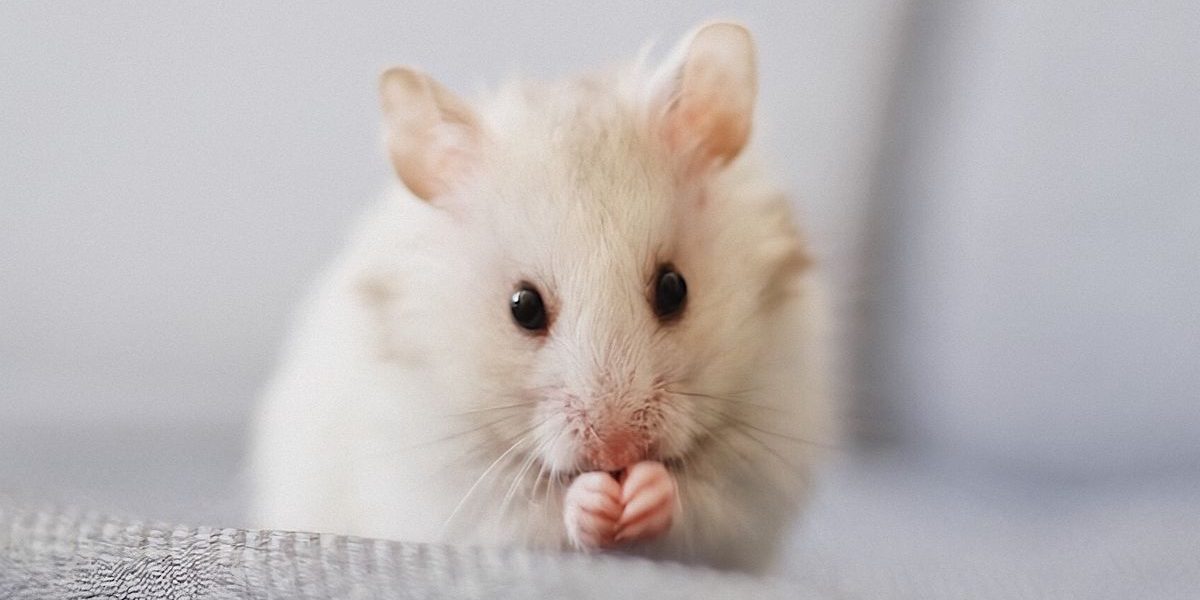
Hamsters are omnivores. The base of the diet should be a food made for hamsters, either pellets or a quality seed and grain mix, with small amounts of fresh vegetables and occasional protein such as boiled egg or mealworms. Fresh food portions should be tiny, about the size of the hamster’s ear, and sugary treats are best avoided.
Because hamsters hoard, food they do not eat straight away ends up in the nest. That is why portions are small, why fresh food needs checking daily, and why a balanced base diet matters more than variety.
The base diet: pellets or a seed mix?
Sources genuinely differ here. PDSA, PetMD and Merck recommend pellets as the base, because hamsters fed only a muesli-style mix can pick out favourite pieces and leave the rest. Blue Cross, Woodgreen and TVT recommend a good-quality mix of grains, seeds and pulses with a protein source. The RSPCA accepts either. Whichever you choose, use a food formulated for hamsters and watch that the whole ration is eaten, not just the tastiest parts. Our best hamster food guide compares options.
How much to feed
| Hamster | Dry food per day | Source |
|---|---|---|
| Syrian | About 10 g, or one tablespoon | Woodgreen |
| Dwarf, Chinese and Roborovski | About 5–8 g, or one teaspoon | Woodgreen |
| Fresh food, any species | A piece about the size of the hamster’s ear | Blue Cross |
PetMD suggests feeding in the evening, when hamsters are waking up. Scatter the dry food through the enclosure, as Blue Cross recommends, to encourage foraging.
Fresh foods generally considered safe
| Type | Examples | Notes |
|---|---|---|
| Vegetables | Broccoli, cabbage, cauliflower, celery, courgette, cucumber, kale, peas, peppers, pumpkin or squash, spinach, sweetcorn | Listed by PDSA. Offer small pieces; Blue Cross suggests going easy on leafy greens, which spoil in the hoard |
| Fruit | Apple without seeds, banana, melon, peach, pear | Listed by PDSA. Sugary, so only occasionally; see the note on dwarfs below |
| Herbs | Parsley, coriander, sage | Listed by PDSA as occasional extras |
| Protein | Plain boiled egg, mealworms, lean cooked meat | Blue Cross, PDSA and Woodgreen. Small amounts |
| Other | Timothy hay, plain cooked pasta, pulses | PDSA suggests hay for fibre; Woodgreen lists pasta and pulses |
Foods to avoid or limit
| Food | Concern | Source |
|---|---|---|
| Chocolate, sugary or salty human foods | Unsuitable for hamsters | PetMD |
| Apple seeds, raw beans, raw potato, almonds, garlic | Listed as foods to avoid | PetMD |
| Rhubarb | Described as potentially poisonous to rodents | RSPCA |
| Citrus fruit | Acidity; PDSA advises against while noting the evidence is inconclusive | PDSA, PetMD |
| Honey or molasses treat sticks, yoghurt drops | High in sugar | Blue Cross, TVT |
| Mineral and salt licks | Unnecessary and possibly harmful | TVT, Woodgreen |
Foods the sources disagree on
- Grapes: the RSPCA says to avoid them; Woodgreen lists them as a treat. We suggest leaving them out.
- Onion: PetMD says to avoid it; PDSA includes it in its vegetable list. We suggest leaving it out.
- Fruit for dwarf hamsters: PDSA allows limited amounts, Blue Cross suggests fruit for Syrians only, and TVT advises none for dwarfs because of their tendency towards diabetes.
When in doubt, skip the food in question. There are plenty of options nobody objects to.
Dwarf hamsters and sugar
PDSA and TVT both note that dwarf hamsters, particularly Russian dwarf types, are prone to diabetes. For these species keep sweet fruit and sweet vegetables to a minimum or avoid them, and choose a food mix made for dwarfs. TVT says Syrian mixes with large grains and fatty seeds are unsuitable for dwarf species.
Treats
Merck suggests treats should make up no more than 10% of the diet. Good choices are a pumpkin or sunflower seed, a small piece of nut, a mealworm or a sprig of herb, used for taming and foraging rather than handed out freely.
Water
Fresh water should always be available. PDSA and the RSPCA prefer a bottle; TVT and Woodgreen prefer a bowl, which many hamsters find more natural to drink from; Blue Cross accepts either. Whichever you use, refresh it daily and check that a bottle is not blocked or leaking.
Introducing new foods and managing the hoard
Add one new food at a time in a very small amount. Sudden diet changes are one of the triggers PDSA lists for diarrhoea. Remove uneaten fresh food the next day, and check the hoard for anything damp or spoiled. Blue Cross and TVT both advise against clearing the hoard out completely, because being unable to store food is stressful.
When to contact a vet
Contact a vet if your hamster stops eating, loses weight, drools, or develops diarrhoea or a wet, soiled rear end. See signs your hamster may be unwell.
Educational content only. This guide cannot diagnose your hamster and is not a substitute for veterinary care. If you are worried about your hamster, contact a vet, ideally one experienced with small or exotic pets.
Frequently asked questions
Can hamsters eat carrots?
Small pieces of cleaned root vegetable are accepted by the RSPCA. Carrot is relatively sweet, so offer it sparingly, particularly to dwarf hamsters.
Can hamsters eat cheese?
TVT lists small amounts of low-salt cottage cheese, low-fat quark or plain yoghurt as an occasional protein. Salty or processed cheese is best avoided.
Can hamsters eat nuts and seeds?
Yes, as treats in very small amounts. PDSA and TVT both list nuts and seeds as occasional extras. PetMD advises against almonds.
How often should I give fresh food?
Guidance ranges from daily small amounts (TVT, PDSA) to a few times a week (Woodgreen). Keep portions ear-sized and remove leftovers.